
Restore Your Indoor Air Quality
As the cool, damp weather descends upon Salem and the Willamette Valley, our instinct is to seal up our homes. Windows are shut tight, doors are weather-stripped and every crack is closed to keep that precious heat in and the chilly air out. While this commitment to energy efficiency is important for lowering your utility bills, it creates a surprising, and potentially unhealthy, side effect: a drastic decline in Indoor Air Quality (IAQ).
At CJ Hansen, we specialize in whole-home comfort, and that includes the air you breathe. When you seal your home for the season, you’re not just trapping heat, you’re trapping the microscopic pollutants generated by building materials, the things we own inside our homes and everyday life. Without proper ventilation, the concentration of these contaminants can spike dramatically in the winter, sometimes becoming up to five times more polluted than the air outside. Here is a deep dive into why this happens and how we can help you fight back.
Lack of Natural Ventilation
During the warmer months, natural ventilation, opening windows, and letting air drift through leaky older homes help to dilute indoor pollutants constantly. When the temperature drops, we eliminate this crucial exchange of air. In modern, tightly sealed homes, the problem is compounded; in older Salem homes, while air leaks may provide some exchange, they do so inefficiently, often leading to unconditioned air and drafts rather than controlled ventilation.
When air can’t escape, and new, fresh air isn’t introduced to replace it, the air you breathe becomes stagnant, saturated with household emissions, leading to what is often described as “stuffy” or “musty” air.
Pollutants That Thrive Indoors
When ventilation is compromised, three main categories of pollutants build up, leading to discomfort and potential long-term health issues:
1. Chemical Pollutants (VOCs and Combustion Byproducts)
These contaminants are often invisible and come from sources we use every day:
- Volatile Organic Compounds (VOCs): These are chemicals that vaporize at room temperature. Concentrations can be elevated in winter because the vapors have nowhere to dissipate. Common Sources Include:
- Cleaning products and disinfectants.
- Air fresheners, scented candles, and plug-in deodorizers.
- Paints, varnishes, and adhesives from recent remodeling projects.
- Off-gassing from new carpets, furniture, and cabinetry (often containing formaldehyde).
- Combustion Byproducts: Any gas-burning appliance, stoves, ovens, fireplaces or furnaces, can release Carbon Monoxide (CO) and Nitrogen Dioxide (NO2). If a furnace is malfunctioning or a kitchen hood isn’t vented properly, these toxic gases become trapped, posing immediate health risks.
2. Biological Pollutants
As people and pets spend more time indoors, biological contaminants proliferate in the stagnant environment:
- Dust Mites and Dander: Dust mites feed on shed human skin cells. Since families are indoors more, the food source increases. Pet dander (tiny flakes of skin) remains airborne longer without fresh air to carry it away, constantly recirculating through your heating system. These are major triggers for asthma and allergies.
- Mold and Mildew: While cold air can be dry, poor air exchange and temperature differentials cause warm indoor air to condense on cold surfaces (especially windows, walls near the foundation and pipes). This trapped moisture creates an ideal habitat for mold growth, whose spores become airborne, leading to respiratory irritation and allergic reactions.
3. Particulate Matter
This refers to the tiny solid and liquid particles suspended in the air, including dust, smoke from candles or fireplaces, and tracked-in outdoor pollutants. These microscopic particles penetrate deep into the lungs, and in high concentrations, can exacerbate existing respiratory conditions like asthma and COPD.
The Solution Strategy
Fighting poor winter indoor air quality requires a multi-pronged approach beyond just opening a window, which wastes the heat you paid for.
Step 1: Maximize Filtration (The Furnace Filter)
Your furnace air filter is the first line of defense. Don’t rely on the cheap disposable filters. Upgrade to a filter with a higher MERV (Minimum Efficiency Reporting Value) rating (MERV 8 to MERV 13 is often ideal for homeowners). A higher MERV rating means the filter can capture smaller particles, including pollen, pet dander, mold spores and even some bacteria. We recommend checking and possibly replacing your filter every 30 to 60 days during peak heating season.
Step 2: Controlled Ventilation (HRVs and ERVs)
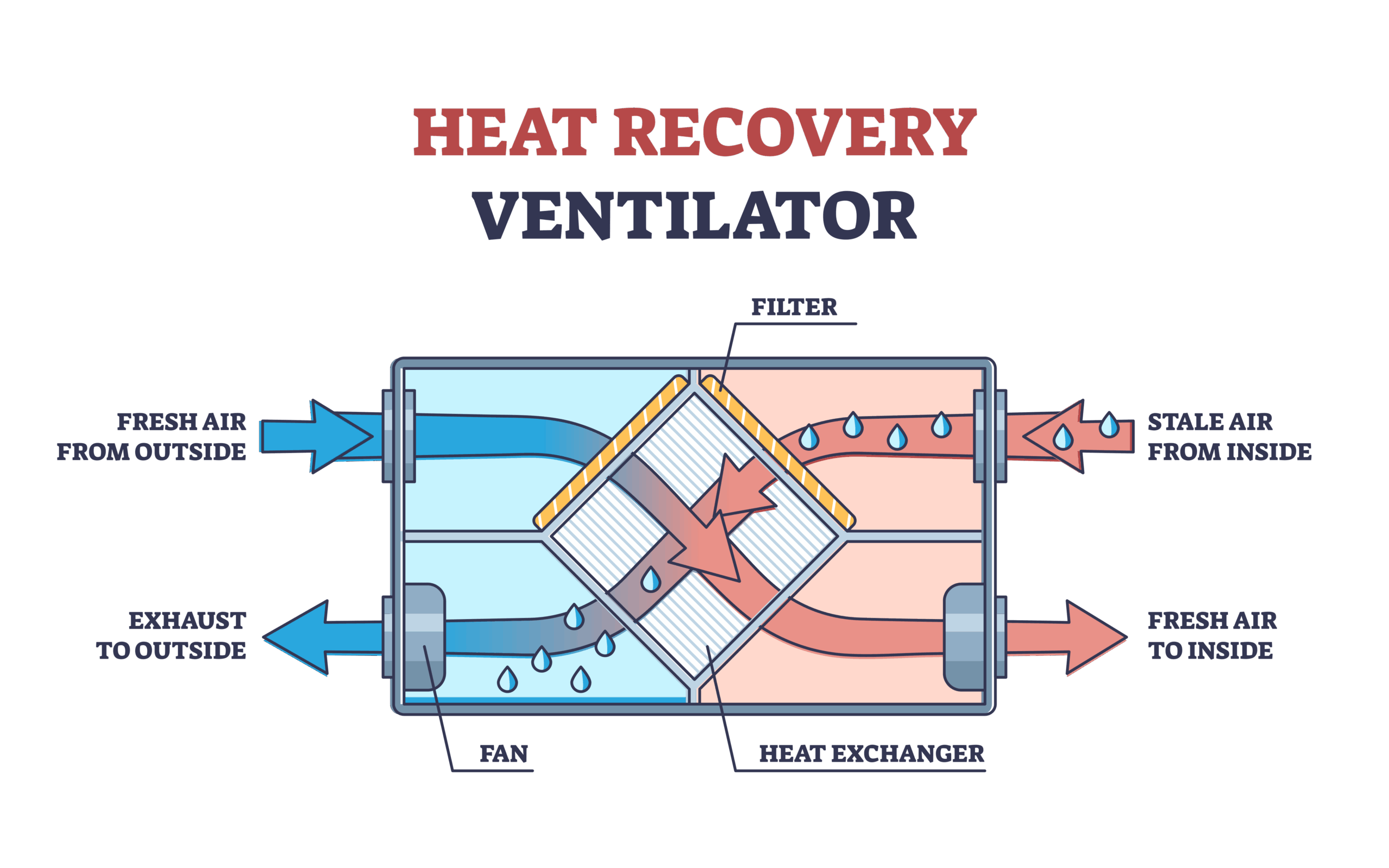
The most effective solution for tightly sealed homes is a professional ventilation system like a Heat Recovery Ventilator (HRV) or an Energy Recovery Ventilator (ERV).
- How They Work: These systems continuously draw stale, polluted air out of your home, generally from the bathrooms, utility areas and kitchen, while simultaneously bringing in fresh outdoor air delivered to living spaces like bedrooms, hallways and living rooms. Critically, before the outgoing stale air is exhausted, it passes up to 80% of its thermal energy to the incoming fresh air via a heat transfer core. This allows you to ventilate your home without losing the conditioned heat you’ve paid for, making it highly efficient.
- Which One is Right? In the damp Willamette Valley climate, an ERV is often recommended because it also manages moisture transfer, ensuring you don’t over-dry your home in the winter or over-humidify in the summer.
Step 3: Targeted Purification and Humidity Control
- Whole-Home Air Purifiers: Systems integrated directly into your ductwork can neutralize and capture particles that even a high-MERV filter misses, including germs and volatile organic compounds.
- Humidifiers and Dehumidifiers: We help you install whole-house systems to maintain that crucial 30-50% humidity level, which fights off dry-air irritation while preventing mold growth and condensation damage in the home.
Don’t let the need for warmth compromise your health this winter. Investing in clean air is investing in your family’s well-being.
Breathe Easier This Season with CJ Hansen
Ready to improve your indoor air quality? Contact CJ Hansen today for a comprehensive home air quality assessment.
Looking for Heating Services?
Stay warm, comfortable and energy-efficient all season long with our heating solutions for every part of your home.