
When Willamette Valley temperatures spike in late summer, your air conditioner can easily consume more than half of your home’s daily energy usage. Keeping your space comfortable shouldn’t mean bracing yourself for a massive utility bill.
By managing how your home gains heat and optimizing your cooling equipment, you can drop your energy consumption without sacrificing indoor relief. Here are four practical, high-efficiency strategies to implement this season.
Top High-Efficiency Strategies for Summer Cooling
1. Switch to a Variable-Speed Heat Pump
Traditional air conditioners run on an all-or-nothing basis: they switch on at 100% capacity, blast cold air, and shut off entirely when they hit the target temperature. This constant cycling consumes a massive amount of electricity. Modern variable-speed heat pumps run continuously at low, hyper-efficient speeds, precisely adjusting to real-time cooling needs and significantly lowering operational costs.
2. Harness the Evening Purge Method
Salem’s climate provides a natural advantage: cool evening air. When outdoor temperatures drop below your indoor thermostat setting at night, shut down your cooling system, open windows on opposite sides of the house, and place a box fan blowing outward in a window. This pulls cool air through the home and flushes out stagnant heat, allowing you to start the next morning with a naturally cooled home.
3. Move the Thermostat Fan Setting to “Auto”
Setting your thermostat fan to “On” keeps the blower motor running 24/7, which can bring the benefits of air filtration if those methods are employed. While this circulates air continuously, it also pulls humidity off of your AC’s “wet” evaporator coil inside your Air Handler. This will, in effect, humidify the return air that is being circulated back into the Home.
Keeping the setting on “Auto”, so the fan runs only when the system is actively cooling, will promote and improve the system’s dehumidification properties, resulting in a cooler effect from a lower indoor Dew Point.
4. Block Solar Heat Gain with Strategic Shading
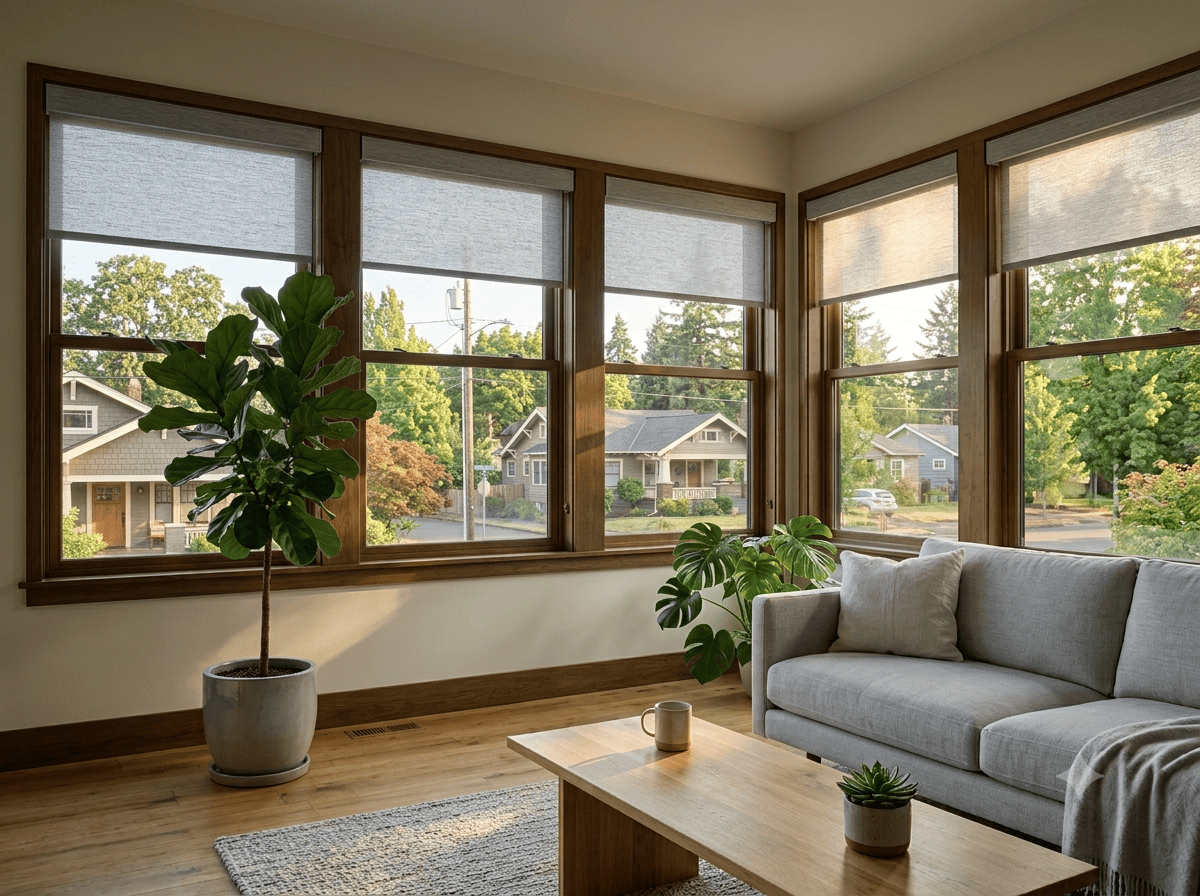
Because western Oregon can feature incredibly long summer days, with intense sunlight hitting the valley well into the evening, solar radiation through your windows is the primary cause of indoor heat spikes. Instead of forcing your AC to fight this heat after it enters, block it at the glass. Utilizing exterior awnings, solar screens, or high-quality interior blackout curtains on south and west-facing windows can drop your home’s radiant heat load by up to 70%.
Get Your Cooling System Peak-Season Ready
The most effective way to lower cooling bills is combining load-reduction strategies (like night air flushing and ceiling fans) with high-efficiency variable-speed HVAC systems running on “Auto” fan settings.
If your older cooling system is struggling to keep up with summer demand, a precision tune-up or a new unit can make a dramatic difference. Call CJ Hansen at (503) 362-3643 to schedule a professional system assessment today.